CanmetMINING is a branch within the Lands and Minerals Sector (LMS) of Natural Resources Canada (NRCan) with about 100 scientists, engineers and technicians located in our research facilities in Ottawa, Sudbury, Val d’Or, QC, and an office in Smithers, BC.
CanmetMINING collaborates closely with Canada’s mining sector partners to reduce the environmental impacts of mining and improve Canada’s competitiveness, through its research, development and innovation. CanmetMINING conducts research and development (R&D) across the mining life cycle – from extraction to closure – through its three business lines: Mining Extraction, Mineral Processing and Environmental Management.
Areas of expertise
- Green Mining Innovation Program
- Critical Minerals R&D Streams
- Battery Minerals
- Mining Value from Waste
- Rare Earth Elements
- Mineralogy
- Mineral Processing
- Metallurgy
- Chromite
- Impact Assessment review of mining projects
- Ecosystem Risk
- Mine Water & Waste characterisation and management
- Climate Change Adaptation & Mitigation
View the profiles of the other locations of CanmetMINING for additional areas of expertise:
- CanmetMINING, Bells Corners Complex
- CanmetMINING, Limebank
- CanmetMINING, Sudbury
- CanmetMINING, Val d'Or
- CanmetMINES, Smithers BC
CanmetMINING Program Activities
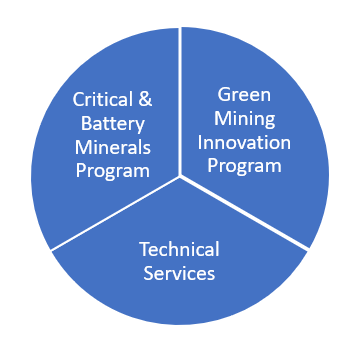
Green Mining Innovation Program
Designed to work in partnership with stakeholders and address at least 6 of the top 10 mining business risks:
- Productivity and costs
- Workforce
- Digital and innovation
- License to operate
- Decarbonization
- Environment and social
2022-2026 Transition to Net Zero
Renewed investments in mining R&D to address key priorities:
- Clean technology adoption
- Critical & battery minerals
- Mining value from waste
- Digital applications in mining
- Deep mining
- Climate change
- Environmental impact assessment
Beyond Carbon: Achieving Net Zero by 2050
CanmetMINING R&D focused under three key priorities:
- Critical Minerals - The building blocks for the low-carbon transition R&D
- Efficient Mining Practices - New mining technologies & best practices
- Climate Resilient Mining - Adaptable & carbon neutral
Organizational Structure
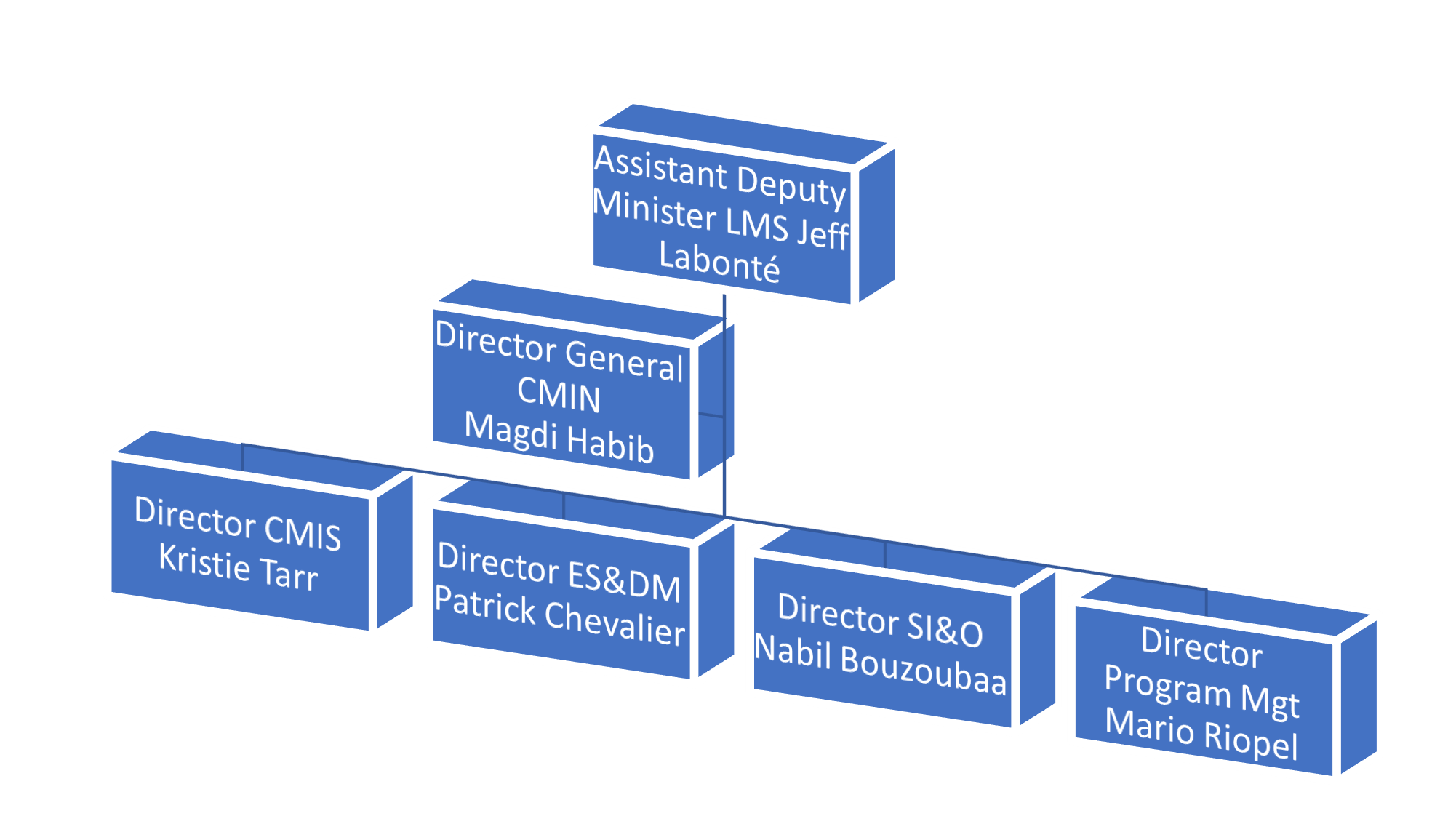
Magdi Habib, Director General
Telephone: (613) 995-4776
555 Booth Street, Ottawa, Ontario K1A 0G1
e-mail: [email protected]
Kristie Tarr, Director, Critical Minerals and Industry Support
Telephone: (705) 670-6553
1079 Kelly Lake Road, Sudbury, Ontario P3E 5P5
e-mail: [email protected]
Patrick Chevalier, Director, Environmental Science & Digital Mining Division
Telephone : (613) 992-4105
555 Booth Street, Ottawa, Ontario K1A 0G1
e-mail: [email protected]
Nabil Bouzoubaâ, Director, Science Infrastructure and Operations
Telephone: (613) 992-4105
555 Booth Street, Ottawa, Ontario K1A 0G1
e-mail: [email protected]
Mario Riopel, Director Program Management
Telephone: (613) 889-6834
555 Booth Street, Ottawa, Ontario K1A 0G1
e-mail: [email protected]
Specialized services
- Certified reference materials
- Proficiency testing program
- Diesel engine certification
- Micro-seismic monitoring and analysis
- Radioactive waste stabilization
- Transformation/dissolution protocol
- Geo-mechanics/dynamics
- Rock mass characterization
Unique equipment
- Electron Microscopes
- ICP-MS Triple-Q
- X-Ray Diffractometer
- Electron Microprobe
- Mineral Liberation Analyzer
- Electric Pulse Disaggregation
- Drop Test Apparatus
- Triaxial Press (MTS)
- HDS treatment mini pilot plant
- Membrane Separation Pilot Scale Process
- Thermal / Optical Carbon Analyzer (ECOC)
- Mineral beneficiation pilot plant
- SelFrag
Key Research Priorities
Critical Minerals Research, Development and Demonstration Active
- Targeted R&D for upstream critical minerals processing, and
battery precursors and related engineering from primary and
secondary sources - Collaborate with federal lab partners to progress battery mineral, mine value from waste, and REE & Other Critical Minerals R&D
- Build critical mineral value chains
- Leverage our world leading ESG credentials and clean mining
practices to position Canada as a supplier of choice - Work with global partners to support investment attraction and
build diversified supply chains for the low carbon and digitized
economy
Key Topic(s)
Unlocking Canada’s critical minerals resource potential:
Battery Minerals
- Energy-efficient decomposition and refinement of refractory lithium minerals for the production of battery precursors
- Optimized methods for direct extraction of lithium from brines
- Development of a bench scale, clean graphite purification system
Mining Value from Waste
- Inventory of critical mineral potential in Canadian mine tailings and design of accepted sampling strategies for resource definition
- Methods for recovery of scandium, magnesium, nickel, cobalt and tungsten from mine wastes
- Recovery of critical minerals from spent batteries and electronic waste
REE & Other Critical Minerals
- Improved mineral processing approaches for rare earth elements
- Pre-commercialization of a Canadian made direct reduction process for chromite ore; Direct alloys from scandium oxide
- Separation of REE using electrodialysis-assisted SX
Partners & Collaborators
- Provide contributions to Canadian companies to advance technological solutions for the production of critical minerals
Benefits
Goals
To build battery & critical mineral value chains in Canada:
- More than 25% of critical minerals related mining technologies
developed by NRCan & federal labs ready for commercial use
- Stimulate new investments in critical mineral production in Canada
- 3 ZEV-related chemical technologies advance beyond laboratory
bench scale
Efficient Mining Practices Priority Active
- Reduced capital and operating costs
- Increased metal recoveries
- Improved worker health and safety
- Reduced environmental impact from mining, specifically reduced water use and better waste management practices
Key Topic(s)
New mining technologies & best practices:
Digital Mining
- Digital tools for navigating the mine permitting process
- Easier access to information for decision-makers, planners, & the general public
- Real-time monitoring systems of environmental contaminants
Responsible mining
- Return of mining lands to functioning ecosystems for potential economic, environmental & community benefits
- Improved information for more effective regulations & for use in environmental impact assessments
- Better selenium regulations based on sound science & reduced risk of selenium release from mining
Extreme Mining Environments
- Ground support systems for the digital age
- Better ground support for deep mines allowing access to otherwise inaccessible ore.
- Assisting with hoist guide inspections through novel preventative maintenance practices
Benefits
De-risking technologies & informing best practices:
- Two remote sensor systems to monitor mine waste performance ready for deployment
- Jurisdictions ready to implement a digital tool to reduce the time it takes to navigate the mine regulatory process
- At least 2 pilot-scale effluent treatment technologies that can remove 95% of metal contaminants
Climate Resilient Mining Priority Active
- RD&D informs policies, regulations, codes & standards
- New green and transformative mining related technologies to reduce the carbon footprint of mining advance towards pre-commercial phase
Key Topic(s)
Adaptable & carbon-neutral mining:
Climate Change Adaptation
- More robust environmental performance of organic covers for mine site reclamation
- Better predictive tools & databases to assist with environmental assessments for new mine projects
- Better dust monitoring methods & improved predictive models for mine dust management
Climate Change Mitigation
- Recovery of waste heat from sources to improve energy efficiency
- New tools for decision-making related to hydrogen applications in mining
- New tools & standards for alternatives to diesel vehicles
Benefits
Develop new standards, methods & tools to:
- Reduce the seasonal variabilities in copper & zinc recoveries and climate resilient organic cover strategies for mine tailings
- Measure & monitor fugitive mine dust at sites in the North
- Provide support for at least 1 C-sequestration project
- At least 1 hydrogen technology prototype implemented in Canadian mining
Technical Services Active
Objective: To deliver technical services & expertise to support a wide range of mining related activities for the industry and government.
Key Topic(s)
- Specialized Expertise – R&D for Radioactive waste stabilization
- Certified Reference Materials (CRM)
- Proficiency Testing Program for Mineral Analysis Laboratories
- Geo-mechanics & rock mass characterization for mining
- Geo-dynamics for static & dynamic support of underground excavations
- Micro-seismic monitoring & analysis
- Diesel particulate matter control, sampling & analysis
- Diesel engine certification for use in underground mines
Energy Efficiency Inactive
This priority focuses on improving energy efficiency in mining and on mitigating climate change by reducing greenhouse gas (GHG) emissions through reducing the consumption of fossil fuels.
Key Topic(s)
- Field of Research 1: Tackling comminution, the largest energy consumer in mining
- Field of Research 2: Benchmarking and automating for energy efficiency underground
- Field of Research 3: Replacing diesel power underground
Partners & Collaborators
Canada Mining Innovation Council (CMIC), National Research Council (NRC), Centre for Excellence in Mining Innovation (CEMI), Canadian Association of Mining Equipment and Services for Export (CAMSE), mining companies, equipment suppliers, and universities
Benefits
Ultimate Outcomes:
- Reduced GHG emissions
- Reduced cost of energy use in mining activities
Intermediate Outcome:
- Reduced energy consumption in mining and milling
Immediate Outcomes:
- Existing and new energy-efficient technologies are identified and optimized
- Risks to the industry adoption of energy-efficient technologies are minimized
Enhanced Productivity Inactive
This priority will examine how to increase the productivity of existing mines through the demonstration and development of automated technologies and innovative equipment; and accelerate the development of new mines in new commodities with the goal of reducing operating and capital costs while increasing efficiency and recoveries.
Key Topic(s)
- Field of Research 1: Increasing underground productivity through automation and innovative equipment
- Field of Research 2: Safer access to deep underground mines
- Field of Research 3: Developing novel techniques for processing rare earth elements and chromite
Partners & Collaborators
Canadian Rare Earth Element Network, Canada Mining Innovation Council (CMIC), Canadian Rare Earth Elements and Chromite Research and Development (http://reechromite.ca), major and junior mining companies, equipment suppliers, universities, engineering firms and consultants, provinces and territories
Benefits
Ultimate Outcome:
- Canada’s mining industry is globally more competitive
Intermediate Outcomes:
- Reduced capital and operating costs of mining operations
- Increased metal recoveries
- Improved worker health and safety
Immediate Outcomes:
- Novel and innovative green mining technologies to increase productivity are available and their benefits are demonstrated
- Risks to the industry adoption of these technologies are minimized
Waste Management Inactive
Under this priority, CanmetMINING will:
- Take a holistic approach to look at tailings as a source of secondary metals and other valuable industrial minerals.
- Seek to demonstrate and develop technologies that can cost-effectively recover metals from mine waste.
- Develop and demonstrate enhanced mine waste technologies for ecosystem restoration and facility closure.
Key Topic(s)
- Field of Research 1: Generating value from mine waste
- Field of Research 2: Enhanced mine waste management for ecosystem restoration and mine closure
Partners & Collaborators
Mining Association of Canada (MAC), Canada Mining Innovation Council (CMIC), mining companies, equipment suppliers, universities, engineering firms and consultants, other government departments, provinces and territories
Benefits
Ultimate Outcomes:
- Reduced mining waste footprint
- Reduced risk to the environment and communities
Intermediate Outcomes:
- Optimal waste management practices are incorporated into the design of new and existing mining projects
Immediate Outcomes:
- Scientific evidence, technologies and best practices leading to decreased liability and costs are developed
- Scientific evidence to support environmental assessments
Water Management Inactive
Under this priority, CanmetMINING will:
- Examine options to treat, recycle and reuse water.
- Improve our understanding of the biological, chemical and physical factors that influence the fate and toxicity of metals in order to develop a watershed-based approach for assessing cumulative effects.
- Assess the risks of climate change on mines.
- Study the effects of changes in water balance (surplus leads to difficulties in treatment and an increased risk of contaminant release; shortage leads to increased demand for processing).
Key Topic(s)
- Field of Research 1: Improving water recovery and recycling in the milling process
- Field of Research 2: Understanding the fate and effects of metal contamination and other pollutants in receiving environments
Partners & Collaborators
Mining Association of Canada (MAC), Canada Mining Innovation Council (CMIC), mining companies, equipment suppliers, universities, engineering firms and consultants, Environment Canada, provinces and territories
Benefits
Ultimate Outcomes:
- Reduced demands on water resources
- Improved water quality from mining operations
Intermediate Outcomes:
- Reduced risk to the aquatic environment
- Enhanced regulations based on sound science
Immediate Outcomes:
- Water use and contamination from mining operations are reduced
- Reduced risk to the aquatic environment
- Enhanced regulations based on sound science
Key Projects, Programs and Initiatives
Key Projects, Programs and Initiatives Active
MINE WATER AND WASTE MANAGEMENT
- Development of novel modified membranes for the treatment of mineral processing effluent streams
- Mining effluent treatment of selenium (METS)
PROCESSING.
- Lithium from brines
- Separation of rare-earth elements using electrodialysis-assisted solvent extraction
CLIMATE CHANGE ADAPTATION AND MITIGATION
- Carbon dioxide sequestration as magnesium carbonate utilizing high serpentine-containing tailings and waste rock
- Integration of net CO2 capture and energy-efficient MgO recovery process from chrysotile tailings
- Evaluation of CO2 sequestration via treatment of acid mine drainage
- Climate change impacts on long-term performance of organic covers in mine tailings
- Multi-Omics Assessment of Climate Change Impacts on Disrupted Ecosystems in Canada's North
ECOSYSTEM RISKS AND ENVIRONMENTAL IMPACT ASSESSMENTS REVIEWS
- Development of a national water quality database to assess shifting baselines in a changing climate
- Fugitive Dust - A recommended approach for the modelling and monitoring of fugitive dust from active and abandoned mine sites
- Development of novel sensor technology for contaminants & nutrients (GRDI)
- Environmental Geochemistry Data Digitization in Support of Mine Permitting
- Genomics Research for Enhanced Tailings Reclamation & Environmental Sustainability (GReEN TReES) – Partnership with CFS
- Solubility, partitioning & toxicity of data-poor metals for the development of environmental guidelines & regulations
- Historical sediment profiles of metals & environmental DNA to evaluate mine impacts on freshwater ecosystems.
- Impact Assessment Review Process of all Canadian mining projects
NRCan Rare Earth Elements and Chromite R&D Program Active
The Canadian rare earth element (REE) and chromite R&D program emphasizes the need to develop, de-risk and demonstrate the technologies required to establish these industries and bring their products to market. Further, technologies will be developed and assessed hand-in-hand with environmental impacts, with a strict goal of establishing methods that minimize environmental impacts and establish appropriate methodologies to manage them.
Additional Information:
Benefits
- Developing the next generation of Canadian professionals in the REE and chromite industry
- Improve the productivity and competitiveness of Canadian mines
- Establishment of Canadian rare earth and chromite industries
Areas of focus
Improved process efficiencies, economic and market analyses to inform technology directions that should be addressed, laboratory and pilot-scale testing facilities, technical reports and publications, engaged and informed REE and chromite stakeholder communities, high quality personnel (HQP) trained, and new processes developed and evaluated.
Partners & Collaborators
REE and chromite industry, Canadian universities, service providers, provincial government, NGO’s, and civil society
Total In-kind Contributions
Total project value
Green Mining Innovation (GMI) Active
The GMI is a pan-Canadian initiative to improve the mining sector’s environmental performance, and to create green technology opportunities for Canadian businesses. Through the GMI, CanmetMINING works to accelerate the research, development and deployment of green mining technologies and practices; enhance innovation and productivity in mining; improve environmental performance; and improve the competitiveness of the Canadian mining industry thereby positioning Canada's mining sector as the global leader in green mining technologies and practices.
Benefits
Ultimate Outcomes:
- Canada’s mining industry is globally more competitive and environmentally responsible
Intermediate Outcomes:
- Reduced capital and operating costs
- Increased metal recoveries
- Improved worker health and safety
- Reduced energy and water use, and waste production
Immediate Outcomes:
- Innovative technologies are available, their benefits are demonstrated, and the risks of adopting them are minimize
- Scientific evidence and best practices are available to inform policies, regulations and decision-making to reduce the environmental impacts of mining
Areas of focus
Energy efficiency, enhanced productivity, waste management, and water management (see research priorities above for more information).
Designed to work in partnership with stakeholders and address at least 6 of the top 10 mining business risks:
- Productivity and costs
- Workforce
- Digital and innovation
- License to operate
- Decarbonization
- Environment and social
2022-2026 Transition to Net Zero
Renewed investments in mining R&D to address key priorities:
- Clean technology adoption
- Critical & battery minerals
- Mining value from waste
- Digital applications in mining
- Deep mining
- Climate change
- Environmental impact assessment
Beyond Carbon: Achieving Net Zero by 2050
CanmetMINING R&D focused under three key priorities:
- Critical Minerals - The building blocks for the low-carbon transition R&D
- Efficient Mining Practices - New mining technologies & best practices
- Climate Resilient Mining - Adaptable & carbon neutral
Partners & Collaborators
Mining companies and associations, universities, non-profit and private research organizations, service providers, provincial and territorial governments, government agencies, and other federal departments
Mining Value from Waste Active
The concept of tailings reprocessing is not new. However, due to technical, policy and regulatory complexities, successes have been limited. The recovery of metal values from tailings is generally viewed as the primary incentive, but is unlikely to be successful unless it is combined with a concomitant reduction in environmental liabilities and the development of downstream market opportunities for tailings products. CanmetMINING is developing an initiative called “Mining Value from Waste”, which aims at bringing together the Canadian R&D community to develop a more cohesive and sustained effort to develop demonstrable reprocessing technologies to address a variety of mine wastes. While currently principally focused on tackling the enormous existing and historic tailings liabilities, it is expected that this effort will grow and eventually transition to include processing opportunities for eliminating or vastly decreasing the generation of new tailings.
Benefits
Deriving economic values from mine waste, reducing liabilities asociated with mine waste
Areas of focus
- Mine Closure
- Tailings Reprocessing
- Flotation
- Regulations
- Tailings Management
- Mineral Processing
Development of high-performance synthetic cables for mine hoisting Active
The project objective is to determine the application of high-performance synthetic fibre cables in mining, including rejection criteria and non-destructive testing methods for the cables during their service life. The project phases are:
- proof of concept, with a focus on windability under load;
- optimization at high speed and under load of the lifespan and integrity of the cables;
- testing in an operating mine.
Benefits
Replacing a steel hoisting cable with a much lighter synthetic fibre cable yields significant economic and ecological benefits for underground mining operations, and for deep mines in particular. The significantly greater strength to weight ratio provided by synthetic cables compared to steel cables gives the advantage of hoisting a larger payload with a similarly sized cable in identical mining facilities.
Areas of focus
- Underground Innovative Equipment
- Mine hoisting
Partners & Collaborators
- Whitehill Mfg
- Teijin Aramid
- Agnico Eagle
- McIvor Engineering Services
Advanced Separation Process Development and Evaluation for Water Management in Mining Active
The objective of this project is to develop processes that will enable the Canadian mining industry to manage water resources more effectively by maximizing water recovery and recycling and increasing the efficiency and effectiveness of water treatment discharge and management. The project supports the Clean Innovation Engagement Strategy and the Water Management priority of the CanmetMINING 5-year research plan.
The project is designed to investigate and identify opportunities for improving water recovery, treatment and recycling in the mining mineral extraction operations as well as to develop, assess and de-risk technologies and processes for recovery and treatment process water streams in operations for mineral extraction.
Some of the technologies that are being investigated and evaluated include pressure driven membrane separation processes such as reverse osmosis, nano- and ultrafiltration, electro technologies such as electrodialysis and electrocoagulation, ceramic membrane based processes as well as vacuum mebrane distillation.
Benefits
The project contributes to reducing the impact of mining operations on Canada’s freshwater resources and helps improve water management in mining and mineral processing mineral processing plant performances such as mineral/metals recovery and concentrate grades.
The project will create processing tools to help mining companies to:
- Improve the recovery and reuse of water - opportunities throughout the mining lifecycle;
- Reduce contaminants discharge into the environment; and
- Improve the capacity for the recycling of water throughout the mineral and metal extraction process with the ultimate goal of a minimal liquid discharge (MLD) operation.
Areas of focus
- Climate Change
- Water Recovery and Recycling
- Flotation
- Mineral Processing
Partners & Collaborators
- Rouchert Inopor
- Hydro-Québec
NRCan Mine Energy Benchmarking Program Active
Benchmarking has been used in several sectors to identify best practices on different matters such as customer satisfaction levels, costs, or energy efficiency. Although tools have been developed to benchmark energy in certain industrial sectors, none are available to comprehensively assess energy performance for mines. The goal for this project is to develop such a tool in collaboration with stakeholders from the mining industry and MiTRAQ, a benchmarking software developer.
Internal benchmarking consists of assessing energy performance of a facility over time and can be used to identify changes in performance that could arise from deteriorating equipment, changes in operating procedures, or implementation of energy conservation measures. Conversely, in external benchmarking a facility compares its performance against that of a peer group with the goal of identifying best practice performance which can be used to set targets for improvement and motivate energy management efforts. The program that has been developed includes both of these types of benchmarking and is available for use by underground and surface mines.
A prototype platform has been developed and is currently (2018) in the testing phase. It is anticipated that the program will be available for dissemination to the mining industry on an international scale starting in 2019.
Benefits
The program that has been established includes a comprehensive list of input variables that affect energy use, specific to either underground or surface mines, thus enabling development of fair and meaningful KPIs to measure performance.
This platform will provide the mining industry with a pragmatic, easy-to-use tool that gives companies the ability to anonymously assess the energy efficiency of their operations in relation to others within the industry. This will be a practical vehicle to recognize companies that achieve outstanding energy management performance.
Energy benchmarking could identify inefficiencies and motivate efforts in energy management, leading to improving performance of the mining industry by reducing energy, operating costs and greenhouse gas emissions. The NRCan Mine Energy Benchmarking platform will provide mines with a viable process or system to assess the impact from investments in energy performance improvements, thus quantifying the benefits of their energy conservation efforts. The tool will also facilitate demonstrating improvement in energy performance despite increasing energy consumption from mining at deeper levels, supporting continuous improvement in energy management.
Areas of focus
Energy Efficiency
Partners & Collaborators
- MiTRAQ
Ceramic membrane modification and regeneration for oil sands produced water treatment Active
The project involves the development of a novel hybrid filtration process for the treatment of process and discharge water streams generated from in-situ processing of oil sands at high temperatures. The purpose of this system is to de-oil and treat oil sands produced water streams at high temperature (90C) and produce clean water suitable for reuse, recycle or disposal. The work puts a great deal of focus on the development of a ceramic and polymeric membrane process for the removal of salts, scaling compounds, suspended colloidal particles and residual oil as well as low molecular weight dissolved organic compounds from oil sands produced water streams.
The work also involves the study of membrane fouling mechanisms and methods of its mitigations such as membrane surface modification and membrane cleaning and regeneration protocols that would help the development of better and novel membranes for oil sands water treatment applications.
The project is led by CanmetMINING in collaboration with Environment and Climate Change Canada, NRCan's CanmetENERGY, University of Ottawa and a number of oil sands companies that have provided produced water samples for the test work.
Benefits
The process developed in this project could be an alternative option to the conventional treatment system used in Steam Assisted Gravity Drainage (SAGD) operations, which utilizes gravity-based unit operations such as free water knockout (FWKO) vessels, API (American Petroleum Institute) separators and skim tanks, and will allow for significant energy savings and improved environmental performance. The water treatment process consists of several stages targeting primary physical oil-water separation by CanmetHYDROCYCLONE, developed and tested by CanmetENERGY, and a secondary ceramic membrane filtration stage for the removal of residual oil and high levels of dissolved solids, developed by CanmetMINING in collaboration with the University of Ottawa and Environment and Climate Change Canada.
Application of ceramic micro- and ultrafiltration membranes has shown limited success in treating SAGD produced water streams, however, membrane fouling remains a significant challenge. The membrane surface modification process for treating the ceramic membrane surfaces allows for fabrication of ceramic membrane with higher degree of resistance to fouling in application related to the treatment of SAGD produced water.
Areas of focus
Water Recovery and Recycling
Partners & Collaborators
- Environment and Climate Change Canada
- CanmetENERGY, NRCan
- MEG Energy
- Rauchert Inopor
Key Projects, Programs and Initiatives Active
- Carbon sequestration – seismic
- Advanced sedimentary rock characterization for CCUS and nuclear waste storage
- Reducing regulator barriers for alternative energy in mining vehicles
- Diesel Engine Emission Evaluation and Approval Plan
- Static and Dynamic Assessment of Rockbolts
- Hydrogen in Mining 1) H2 Roadmap 2) Guideline H2 End Use 3) CSR Gap Analysis
Benefits
This innovation is the intellectual property of the NRC.
Yves Quenneville is the business officer at NRC (514 496-8507) for more information on technology and intellectual property rights. The bolt, equipped with an ultrasonic sensor, will provide real-time information on the integrity of the bolt, the total load applied to the bolt or one of its sections, and the presence of elastic and plastic deformation. Using that information, it will be possible to make correlations with the mine’s geomechanical model, if applicable, and maybe even scale down the bolting pattern in some sectors. Furthermore, these new sensors, both economical and durable in the mining environment, will increase the level of safety in underground mining operations.
Areas of focus
Ground support
3D Rock Size Sensor Active
Lately laser 3D profiler has been identified as the best technology for measuring rock size distribution over a conveyor belt and they are now distributed by two European companies. CanmetMINING has extended their application for measuring the ore size distribution before primary crushing in order 1) to provide an accurate evaluation of the reduction ratio at the primary crushing stage and allow the development of a rock hardness sensor, 2) to quantify the quality of the blast before any crushing size reduction, and 3) to address the fine measurement issue associated to conveyor belt system. The prototype was tested with success in a rock quarry environment and was improved based on identified issues, such as the necessity to evaluate on-line the variability of the free fall speed of the rock.
A laboratory scale version of the 3D laser scanner was build in parallel for measuring the entire volume of rock pieces and computing for the first time a rock size distribution based on a direct volume measurement of the rock pieces. The laboratory 3D rock size sensor will also allow characterizing the form of the rock pieces in large sample, and studying the impact of the form factor on grinding mill efficiency.
Both technologies are included in the same patent application, which was filed on February 15, 2108.
• Methods for measuring properties of rock pieces, PCT Patent No. 1702530.5, which relates to and claims the priority benefit of United Kingdom Patent Application No. 1702530.5 filed on February 16, 2017.
Benefits
More than 45% of the energy used in a typical open-pit mine operation is spent in rock size reduction. Worldwide, comminution consumes about 3% of the world electrical energy. A distribution of energy study shows that blasting accounts for 3 – 5%, crushing for 5 – 7%, and grinding for 90% of the total energy used. Energy efficiency is less than 1% in industrial grinding processes. One of the causes of the low efficiency of the grinding mill is the high variability of the run-of-mine ore hardness and size distribution feeding the process. Accurate measurement of those two perturbations is the first step in developing process control strategies that will minimise their impact on mill efficiency.
A gap analysis in rock fragmentation has shown that for the last 10-15 years, the most important research in comminution has been in measuring and controlling the variations of the mill content - mainly ore hardness and size distribution - and minimising its impact on mill efficiency. However, sensors for measuring on-line the hardness of the ore remain unavailable. Some prototype soft-sensors computing a rock hardness index from process operating data were proposed. One of them calculates a hardness index from the drill data; results are rather disappointing because the calculated index was found to depend more on the drill operator skills than the hardness of the ore itself. Another one, based on a model based analysis of the crusher data was found more promising but such a hardness sensor requires definitely a more accurate measurement of the rock size distribution before and after primary crushing.
Areas of focus
- Comminution
- Preconcentrationb
Partners & Collaborators
- INO
- Graymont
- BBA
Coarse Particle Flotation Active
Grinding is an energy intensive process. More than 45% of the energy costs in a mine occur in the grinding circuit. Thus, if the grind size could be increased, this would represent significant savings in energy costs (less energy used), lower contaminants to environment (lower surface area results in lower contaminants leached) and CAPEX and APEX (increased concentrator capacity). Thus, with the benefits mentioned above, lower grade ore may be treated economically.
Metal recovery varies as a function of grind size. Typically, flotation works well for particles in the range of 20 to 150 µm. Outside this range, the metal recovery decreases. Factors that influence coarse particle recovery are particle hydrophobicity (stronger collectors result in higher hydrophobicity and increased floatability), mixing environment in flotation cell (high turbulence tends to detach particles from bubbles), frothers (stronger frothers are required to support the recovered coarse particles) etc…
An alternate technique to conventional flotation that can be used for coarse particle flotation is the Hydrofloat apparatus. This is an aerated fluidized-bed reactor; it combines the effect of flotation with gravity separation. More than 50 units have been installed worldwide.
Ideally, higher hydrophobicity and less turbulent environment in float cells are needed to increase coarse particle flotation. In this proposal, these concepts will be tested through Flash Flotation and the Hydrofloat apparatus. Ores from 2 to 3 concentrators will be tested. For example, nickel ores, copper-molybdenum ores etc.
Benefits
Various collectors, frothers and equipment (Hydrofloat) will be tested to increase the recovery of coarse particles (>250 micrometers).
The information or findings will provide insights to the type of collectors and/or frothers needed to increase the recovery of coarse particles. Also, the equipment required to increase coarse particle flotation will be demonstrated.
Areas of focus
Flotation
Method development for assessing the removal of metals from the water column for aquatic hazard classification Active
Since 2011, the Nickel Institute and other metal commodity associations have been collaborating very closely with several research institutes, including CanmetMINING, in order to develop an alternative methodology for assessing the chronic environmental classification for metals. The methodology currently established in the UN GHS (Global Harmonised System for classification) is based on degradability of organic chemicals and as such, is not applicable to metals and inorganic substances. Methodology that has been developed in this project is an extension of an OECD protocol and can be used by regulators and industry to ensure a scientifically correct hazard classification for metals and inorganic compounds.
Benefits
The Rapid Removal Data Pack was delivered to ECHA, the EU Commission, and the OECD in April 2018 to reopen the discussion on the rapid degradation concept for metals under the UN GHS Environmental Hazard Classification category. This data package included contributions from several research teams who collaborated on this project, including CanmetMINING, University of Michigan, and Mutch Associates. Foremost to the approach is the extended Transformation/Dissolution protocol approach and methodology developed primarily with CanmetMINING and contributions from others.
Areas of focus
- Metals Toxicity
- Regulations
Partners & Collaborators
- NiPERA
- Cobalt Institute
- International Zinc Association
- RioTinto
- Eurometaux
- International Copper Association
- International Lead Association
Tracking Dust Under a Changing Climate: Coupling Biogeochemistry, Mineralogy, and Toxicology to Assess Cumulative Mine Site Impacts Active
Many active and abandoned mining areas across Canada are vulnerable to weather extremes from a changing climate. Models suggest that the generation of dust may become more severe, leading to greater impacts on the surrounding environment. Potential effects of dust on air quality are a challenge for waste management at most modern mine sites. This project aims to develop tools to monitor and manage dust and improve our ability to mitigate the cumulative impacts of climate change on metal mines across Canada.
Benefits
This project will fill important knowledge gaps with respect to our understanding of the impacts of climate change on resource development in addition to improving our understanding of the cumulative effects of dust impacts away from the immediate bounds of mine sites.
Areas of focus
- Metals Toxicity
- Climate Change
- Regulations
- Tailings Management
Partners & Collaborators
- Queens University
- Geological Survey of Canada
Remobilizing metals - the impact of climate change on the fate of sediment-bound metals Active
Historical contamination of soils and sediments in environments surrounding mining activity pose a potential environmental threat in a changing climate. Remediation efforts have been conducted, many involving liming to increase the pH of soils and sediments and oxidation of waterways to limit the mobility of metals. While these remediation efforts have had significant positive impacts on the environment the underlying metal contamination still remains and under a changing climate there is a potential risk for remobilization. This study is investigating the effects of sediment drying (due to long-term droughts) and subsequent flooding on the mobility, bioavailability and toxicity of sediment-bound metals. This research will also investigate the various biogeochemical factors involved in remobilizing metals and how these factors are affected by climate change.
Benefits
It is important to understand the potential impacts of climate change on this mining legacy so we can better prepare and provide solutions to prevent any significant environmental damage. This work will also improve our understanding of the extent of historical contamination in mining areas and identify potential areas of concern for future remediation efforts.
Areas of focus
- Ecosystem Restoration
- Metals Toxicity
- Climate Change
- Regulations
Partners & Collaborators
- Laurentian University
- National Research Council